The history of China stretches back into the mists of time. The traditional story of this ancient history was recorded by the historian Sima Qian during the Western Han Dynasty in the Shiji (Records of the Grand Historian), beginning with the legendary Three Sovereigns and Five Emperors and continuing through the (archaeologically poorly-attested) Xia Dynasty. The earliest dynasty for which archaeological evidence exists, the Shang Dynasty, traditionally ruled from 1600 to 1046 BCE, before being overthrown by King Wu of Zhou.
The kings of the Zhou Dynasty would rule de jure for approximately 800 years, but according to Sima Qian the period of actually-effective Zhou kingship lasted until only 771 BCE. The remainder of the era, divided into the Spring and Autumn Period (770 – 481 BCE) and the Warring States Period (475 – 221 BCE), saw the Zhou kings reduced to figureheads while their realm fragmented into numerous competing and, eventually (as the name suggests), warring states.
The
Shang Dynasty (Shāng cháo, 商朝 ) (c. 1600 BCE – c. 1046 BCE)
Like its predecessor, the traditional history of the Shang Dynasty is compiled from a collection of classic Warring States-era texts that were later compiled by the Han Dynasty historian Sima Qian in the Shiji (Records of the Grand Historian). Unlike its predecessors, however, there is indisputable archaeological evidence attesting to the existence of the Shang. This includes the first evidence for Chinese writing, the famous oracle bone inscriptions used for divination purposes, as well as royal tombs and other artifacts.
According to the traditional histories, the first king of the Shang Dynasty was Tang, who overthrow the final king of the Xia Dynasty King Jie at the Battle of Mingtao around 1600 BCE. King Jie is depicted in the histories as a cruel tyrant, and ultimately this would be the fate of the Shang as well: the final Shang king, Di Xin, is described in the texts as a depraved, impious, and hedonistic ruler. His defeat and overthrow by Wu of Zhou at the Battle of Muye in c. 1046 BCE was portrayed by the succeeding Zhou Dynasty as the Shang losing the Mandate of Heaven (Tiānmìng, 天命 ), as the Xia had lost it to the Shang.
List of Kings of the Shang Dynasty
Kings of the Shang Dynasty
Name
Dynasty
Dates
Da Yi (Dà Yǐ, 大乙)
Date of birth/date of death:
Born unknown. Died unknown.
References:
1. David N. Keightley, “The Shang: China’s First Historical Dynasty,” in The Cambridge History of Ancient China: From the Origins of Civilization to 221 BC, ed. Michael Loewe and Edward L. Shaughnessy (Cambridge: Cambridge University Press, 1999), 234.
Royal House of Shang
fl. c. 1570 BCE
Da Ding1 (Dà Dīng, 大丁)
Date of birth/date of death:
Born unknown. Died unknown.
References:
1. David N. Keightley, “The Shang: China’s First Historical Dynasty,” in The Cambridge History of Ancient China: From the Origins of Civilization to 221 BC, ed. Michael Loewe and Edward L. Shaughnessy (Cambridge: Cambridge University Press, 1999), 234.
Royal House of Shang
unknown
Da Jia (Dà Jiǎ, 大甲)
Date of birth/date of death:
Born unknown. Died unknown.
References:
1. David N. Keightley, “The Shang: China’s First Historical Dynasty,” in The Cambridge History of Ancient China: From the Origins of Civilization to 221 BC, ed. Michael Loewe and Edward L. Shaughnessy (Cambridge: Cambridge University Press, 1999), 234.
Royal House of Shang
unknown
Wai Bing2 (Wài Bǐng, 外丙)
Date of birth/date of death:
Born unknown. Died unknown.
References:
1. David N. Keightley, “The Shang: China’s First Historical Dynasty,” in The Cambridge History of Ancient China: From the Origins of Civilization to 221 BC, ed. Michael Loewe and Edward L. Shaughnessy (Cambridge: Cambridge University Press, 1999), 234.
Royal House of Shang
unknown
Da Geng (Dà Gēng, 大庚)
Date of birth/date of death:
Born unknown. Died unknown.
References:
1. David N. Keightley, “The Shang: China’s First Historical Dynasty,” in The Cambridge History of Ancient China: From the Origins of Civilization to 221 BC, ed. Michael Loewe and Edward L. Shaughnessy (Cambridge: Cambridge University Press, 1999), 234.
Royal House of Shang
unknown
Xiao Jia (Xiǎo Jiǎ, 小甲)
Date of birth/date of death:
Born unknown. Died unknown.
References:
1. David N. Keightley, “The Shang: China’s First Historical Dynasty,” in The Cambridge History of Ancient China: From the Origins of Civilization to 221 BC, ed. Michael Loewe and Edward L. Shaughnessy (Cambridge: Cambridge University Press, 1999), 234.
Royal House of Shang
unknown
Da Wu (Dà Wù, 大戊)
Date of birth/date of death:
Born unknown. Died unknown.
References:
1. David N. Keightley, “The Shang: China’s First Historical Dynasty,” in The Cambridge History of Ancient China: From the Origins of Civilization to 221 BC, ed. Michael Loewe and Edward L. Shaughnessy (Cambridge: Cambridge University Press, 1999), 234.
Royal House of Shang
unknown
Zhong Ding (Zhòng Dīng, 仲丁)
Date of birth/date of death:
Born unknown. Died unknown.
References:
1. David N. Keightley, “The Shang: China’s First Historical Dynasty,” in The Cambridge History of Ancient China: From the Origins of Civilization to 221 BC, ed. Michael Loewe and Edward L. Shaughnessy (Cambridge: Cambridge University Press, 1999), 234.
Royal House of Shang
unknown
Bu Ren (Bǔ Rén, 卜壬)
Date of birth/date of death:
Born unknown. Died unknown.
References:
1. David N. Keightley, “The Shang: China’s First Historical Dynasty,” in The Cambridge History of Ancient China: From the Origins of Civilization to 221 BC, ed. Michael Loewe and Edward L. Shaughnessy (Cambridge: Cambridge University Press, 1999), 234.
Royal House of Shang
unknown
Jian Jia (Jiān Jiǎ, 戔甲)
Date of birth/date of death:
Born unknown. Died unknown.
References:
1. David N. Keightley, “The Shang: China’s First Historical Dynasty,” in The Cambridge History of Ancient China: From the Origins of Civilization to 221 BC, ed. Michael Loewe and Edward L. Shaughnessy (Cambridge: Cambridge University Press, 1999), 234.
Royal House of Shang
unknown
Zu Yi (Zǔ Yǐ, 祖乙)
Date of birth/date of death:
Born unknown. Died unknown.
References:
1. David N. Keightley, “The Shang: China’s First Historical Dynasty,” in The Cambridge History of Ancient China: From the Origins of Civilization to 221 BC, ed. Michael Loewe and Edward L. Shaughnessy (Cambridge: Cambridge University Press, 1999), 234.
Royal House of Shang
unknown
Zu Xin (Zǔ Xīn, 祖辛)
Date of birth/date of death:
Born unknown. Died unknown.
References:
1. David N. Keightley, “The Shang: China’s First Historical Dynasty,” in The Cambridge History of Ancient China: From the Origins of Civilization to 221 BC, ed. Michael Loewe and Edward L. Shaughnessy (Cambridge: Cambridge University Press, 1999), 234.
Royal House of Shang
unknown
Qiang Jia (Qiāng Jiǎ, 羌甲)
Date of birth/date of death:
Born unknown. Died unknown.
References:
1. David N. Keightley, “The Shang: China’s First Historical Dynasty,” in The Cambridge History of Ancient China: From the Origins of Civilization to 221 BC, ed. Michael Loewe and Edward L. Shaughnessy (Cambridge: Cambridge University Press, 1999), 234.
Royal House of Shang
unknown
Zu Ding (Zǔ Dīng, 祖丁)
Date of birth/date of death:
Born unknown. Died unknown.
References:
1. David N. Keightley, “The Shang: China’s First Historical Dynasty,” in The Cambridge History of Ancient China: From the Origins of Civilization to 221 BC, ed. Michael Loewe and Edward L. Shaughnessy (Cambridge: Cambridge University Press, 1999), 234.
Royal House of Shang
unknown
Nan Geng (Nán Gēng, 南庚)
Date of birth/date of death:
Born unknown. Died unknown.
References:
1. David N. Keightley, “The Shang: China’s First Historical Dynasty,” in The Cambridge History of Ancient China: From the Origins of Civilization to 221 BC, ed. Michael Loewe and Edward L. Shaughnessy (Cambridge: Cambridge University Press, 1999), 234.
Royal House of Shang
unknown
Xiang Jia (Xiàng Jiǎ, 象甲)
Date of birth/date of death:
Born unknown. Died unknown.
References:
1. David N. Keightley, “The Shang: China’s First Historical Dynasty,” in The Cambridge History of Ancient China: From the Origins of Civilization to 221 BC, ed. Michael Loewe and Edward L. Shaughnessy (Cambridge: Cambridge University Press, 1999), 235.
Royal House of Shang
unknown
Pan Geng (Pán Gēng, 盤庚)
Date of birth/date of death:
Born unknown. Died unknown.
References:
1. David N. Keightley, “The Shang: China’s First Historical Dynasty,” in The Cambridge History of Ancient China: From the Origins of Civilization to 221 BC, ed. Michael Loewe and Edward L. Shaughnessy (Cambridge: Cambridge University Press, 1999), 235.
Royal House of Shang
unknown
Xiao Xin (Xiǎo Xīn, 小辛)
Date of birth/date of death:
Born unknown. Died unknown.
References:
1. David N. Keightley, “The Shang: China’s First Historical Dynasty,” in The Cambridge History of Ancient China: From the Origins of Civilization to 221 BC, ed. Michael Loewe and Edward L. Shaughnessy (Cambridge: Cambridge University Press, 1999), 235.
Royal House of Shang
unknown
Xiao Yi (Xiǎo Yǐ, 小乙)
Date of birth/date of death:
Born unknown. Died unknown.
References:
1. David N. Keightley, “The Shang: China’s First Historical Dynasty,” in The Cambridge History of Ancient China: From the Origins of Civilization to 221 BC, ed. Michael Loewe and Edward L. Shaughnessy (Cambridge: Cambridge University Press, 1999), 235.
Royal House of Shang
unknown
Wu Ding (Wǔ Dīng, 武丁)
Date of birth/date of death:
Born unknown. Died c. 1192 BCE.
References:
1. David N. Keightley, “The Shang: China’s First Historical Dynasty,” in The Cambridge History of Ancient China: From the Origins of Civilization to 221 BC, ed. Michael Loewe and Edward L. Shaughnessy (Cambridge: Cambridge University Press, 1999), 240.
Royal House of Shang
unknown – 1189 BCE
Zu Geng (Zǔ Gēng, 祖庚)
Date of birth/date of death:
Born unknown. Died c. 1184 BCE.
References:
1. David N. Keightley, “The Shang: China’s First Historical Dynasty,” in The Cambridge History of Ancient China: From the Origins of Civilization to 221 BC, ed. Michael Loewe and Edward L. Shaughnessy (Cambridge: Cambridge University Press, 1999), 240.
Royal House of Shang
1188 BCE – 1178 BCE
Zu Jia (Zǔ Jiǎ, 祖甲)
Date of birth/date of death:
Born unknown. Died c. 1158 BCE.
References:
1. David N. Keightley, “The Shang: China’s First Historical Dynasty,” in The Cambridge History of Ancient China: From the Origins of Civilization to 221 BC, ed. Michael Loewe and Edward L. Shaughnessy (Cambridge: Cambridge University Press, 1999), 240.
Royal House of Shang
1177 BCE – 1158 BCE
Lin Xin (Lǐn Xīn, 廩辛)
Date of birth/date of death:
Born unknown. Died c. 1149 BCE.
References:
1. David N. Keightley, “The Shang: China’s First Historical Dynasty,” in The Cambridge History of Ancient China: From the Origins of Civilization to 221 BC, ed. Michael Loewe and Edward L. Shaughnessy (Cambridge: Cambridge University Press, 1999), 240.
Royal House of Shang
1157 BCE – 1149 BCE
Kang Ding (Kāng Dīng, 康丁)
Date of birth/date of death:
Born unknown. Died c. 1132 BCE.
References:
1. David N. Keightley, “The Shang: China’s First Historical Dynasty,” in The Cambridge History of Ancient China: From the Origins of Civilization to 221 BC, ed. Michael Loewe and Edward L. Shaughnessy (Cambridge: Cambridge University Press, 1999), 240.
Royal House of Shang
1148 BCE – 1132 BCE
Wu Yi (Wǔ Yǐ, 武乙)
Date of birth/date of death:
Born unknown. Died c. 1117 BCE.
References:
1. David N. Keightley, “The Shang: China’s First Historical Dynasty,” in The Cambridge History of Ancient China: From the Origins of Civilization to 221 BC, ed. Michael Loewe and Edward L. Shaughnessy (Cambridge: Cambridge University Press, 1999), 240.
Royal House of Shang
1131 BCE – 1117 BCE
Wen Ding (Wén Dīng, 文丁)
Date of birth/date of death:
Born unknown. Died c. 1106 BCE.
References:
1. David N. Keightley, “The Shang: China’s First Historical Dynasty,” in The Cambridge History of Ancient China: From the Origins of Civilization to 221 BC, ed. Michael Loewe and Edward L. Shaughnessy (Cambridge: Cambridge University Press, 1999), 240.
Royal House of Shang
1116 BCE – 1106 BCE
Di Yi (Dì Yǐ, 帝乙)
Date of birth/date of death:
Born unknown. Died c. 1087 BCE.
References:
1. David N. Keightley, “The Shang: China’s First Historical Dynasty,” in The Cambridge History of Ancient China: From the Origins of Civilization to 221 BC, ed. Michael Loewe and Edward L. Shaughnessy (Cambridge: Cambridge University Press, 1999), 240.
Royal House of Shang
1105 BCE – 1087 BCE
Di Xin (Dì Xīn, 帝辛)
Date of birth/date of death:
Born unknown. Died 1045 BCE.
References:
1. David N. Keightley, “The Shang: China’s First Historical Dynasty,” in The Cambridge History of Ancient China: From the Origins of Civilization to 221 BC, ed. Michael Loewe and Edward L. Shaughnessy (Cambridge: Cambridge University Press, 1999), 240.
Royal House of Shang
1086 BCE – 1045 BCE
Notes and References
[1] It is uncertain whether Da Ding actually succeeded his father Tang as king; Sima Qian says that he didn’t, while oracle bone inscriptions record him as the second Shang king.
[2] Sima Qian records Wai Bing as the second king of the Shang Dynasty.
The Yuan Dynasty (Yuán cháo, 元朝) (1271 – 1368)
Heads of State of the Yuan Dynasty
List of Emperors of the Yuan Dynasty
Emperors of the Yuan Dynasty
Ruler
Dynasty
Dates of Reign
Hongwu Emperor (Zhū Yuánzhāng)
Date of birth/date of death: b. October 29 1328; d. June 24 1398.
House of Zhu
January 23 1368 – June 24 1398
The Ming Dynasty (Míng cháo, 明朝 ) (1368 – 1644)
Heads of State of the Ming Dynasty
List of Emperors of the Ming Dynasty
Ruler
Dynasty
Dates
Hongwu Emperor (Zhū Yuánzhāng)
Date of birth/date of death: b. October 29 1328; d. June 24 1398.
House of Zhu
January 23 1368 – June 24 1398
Jianwen Emperor (Zhū Yǔnwén)
Date of birth/date of death: b. December 5 1377; d. July 13 1402.
House of Zhu
June 30 1398 – July 13 1402
Yongle Emperor (Zhū Dì)
Date of birth/date of death: b. May 2 1360; d. August 12 1424.
House of Zhu
July 17 1402 – August 12 1424
Hongxi Emperor (Zhū Gāochì)
Date of birth/date of death: b. August 16 1378; d. May 29 1425.
House of Zhu
August 12 1424 – May 29 1425
Xuande Emperor (Zhū Zhānjī)
Date of birth/date of death: b. March 16 1399; d. January 31 1435.
House of Zhu
May 29 1425 – January 31 1435
Zhengtong Emperor (Zhū Qízhèn)
Date of birth/date of death: b. November 29 1427; d. February 23 1464.
House of Zhu
January 31 1435 – September 22 1449
Jingtai Emperor (Zhū Qíyù)
Date of birth/date of death: b. September 21 1428; d. March 14 1457.
House of Zhu
September 22 1449 – February 11 1457
Tianshun Emperor (Zhū Qízhèn)
Date of birth/date of death: b. November 29 1427; d. February 23 1464.
House of Zhu
February 11 1457 – February 23 1464
Chenghua Emperor (Zhū Jiànshēn)
Date of birth/date of death: b. December 9 1447; d. September 9 1487.
House of Zhu
February 23 1464 – September 9 1487
Hongzhi Emperor (Zhū Yòuchēng)
Date of birth/date of death: b. July 30 1470; d. June 8 1505.
House of Zhu
September 9 1487 – June 8 1505
Zhengde Emperor (Zhū Hòuzhào)
Date of birth/date of death: b. November 14 1491; d. April 20 1521.
House of Zhu
June 8 1505 – April 20 1521
Jiajing Emperor (Zhū Hòucōng)
Date of birth/date of death: b. September 16 1507; d. January 23 1567.
House of Zhu
May 27 1521 – January 23 1567
Longqing Emperor (Zhū Zàijì)
Date of birth/date of death: b. March 4 1537; d. July 5 1572.
House of Zhu
January 23 1567 – July 5 1572
Wanli Emperor (Zhū Yìjūn)
Date of birth/date of death: b. September 4 1563; d. August 18 1620.
House of Zhu
July 5 1572 – August 18 1620
Taichang Emperor (Zhū Chángluò)
Date of birth/date of death: b. August 28 1582; d. September 26 1620.
House of Zhu
August 28 1620 – September 26 1620
The Qing Dynasty ( Qīng cháo, 清朝 ) (1644 – 1912)
Heads of State of the Qing Dynasty
List of Emperors of the Qing Dynasty
Ruler
Dynasty
Dates
Shunzhi Emperor
Date of birth/date of death: b. March 15 1638; d. February 5 1661.
House of Aisin-Gioro
October 8 1643 – February 5 1661
Kangxi Emperor
Date of birth/date of death: b. May 4 1654; d. December 20 1722.
House of Aisin-Gioro
February 5 1661 – December 20 1722
Yongzheng Emperor
Date of birth/date of death: b. December 13 1678; d. October 8 1735.
House of Aisin-Gioro
December 27 1722 – October 8 1735
Qianlong Emperor
Date of birth/date of death: b. September 25 1711; d. February 7 1799.
House of Aisin-Gioro
October 18 1735 – February 9 1796
Jiaqing Emperor
Date of birth/date of death: b. November 13 1760; d. September 2 1820.
House of Aisin-Gioro
February 9 1796 – September 2 1820
Daoguang Emperor
Date of birth/date of death: b. September 16 1782; d. February 26 1850.
House of Aisin-Gioro
October 3 1820 – February 26 1850
Xianfeng Emperor
Date of birth/date of death: b. July 17 1831; d. August 22 1861.
House of Aisin-Gioro
March 9 1850 – August 22 1861
Tongzhi Emperor
Date of birth/date of death: b. April 27 1856; d. January 12 1875.
House of Aisin-Gioro
November 11 1861 – January 12 1875
Guangxu Emperor
Date of birth/date of death: b. August 14 1871; d. November 14 1908.
House of Aisin-Gioro
February 25 1875 – November 14 1908
Xuantong Emperor
Date of birth/date of death: b. February 7 1906; d. October 17 1967.
House of Aisin-Gioro
December 2 1908 – February 12 1912
The Xuantong Emperor (better known as Puyi) was briefly restored to the throne by the Qing loyalist warlord Zhang Xun in the so-called Manchu Restoration of July 1917.
Xuantong Emperor
Date of birth/date of death: b. February 7 1906; d. October 17 1967.
House of Aisin-Gioro
July 1 1917 – July 12 1917
Heads of State of China
Provisional Government of the Republic of China
President of the Provisional Government of the Republic of China
Sun Yat-sen
Date of birth/date of death: b. November 12 1866; d. March 12 1925.
Tongmenghui
1912
Republic of China
President of the Republic of China
V.K. Wellington Koo (*acting)
Date of birth/date of death: b. January 29 1888; d. November 14 1985.
Independent
1926 – 1927
Chair of the National Government of the Republic of China
Chiang Kai-shek
Date of birth/date of death: b. October 31 1887; d. April 5 1975.
Kuomintang
1928 – 1931
Chiang Kai-shek
Date of birth/date of death: b. October 31 1887; d. April 5 1975.
Kuomintang
1943 – 1948
President of the Republic of China
Chiang Kai-shek
Date of birth/date of death: b. October 31 1887; d. April 5 1975.
Kuomintang
1948 – 1949
Chiang Kai-shek
Date of birth/date of death: b. October 31 1887; d. April 5 1975.
Kuomintang
1950 – 1975
Chiang Ching-kuo
Date of birth/date of death: b. April 27 1910; d. January 13 1988.
Kuomintang
1975 – 1988
Lee Teng-hui
Date of birth/date of death: b. January 15 1923; d. July 30 2020.
Kuomintang
1988 – 2000
Chen Shui-bian
Date of birth/date of death: b. October 12 1950.
Democratic Progressive Party
2000 – 2008
Ma Ying-jeou
Date of birth/date of death: b. July 13 1950.
Premiers: Liu Chao-shiuan (2008 – 2009); Wu Den-yih (2009 – 2012); Sean Chen (2012 – 2013); Jiang Yi-huah (2013 – 2014); Mao Chi-kuo (2014 – 2016); Chang San-cheng (2016).
Other prominent offices: Minister of Research, Development, and Evaluation (1988 – 1991); Minister of Justice (1993 – 1996); Mayor of Taipei (1998 – 2006); Chairman of the Kuomintang (2005 – 2007, 2009 – 2014).
Kuomintang
2008 – 2016
Tsai Ing-wen
Date of birth/date of death: b. August 31 1956.
Premiers: Lin Chuan (2016 – 2017); Lai Ching-te (2017 – 2019); Su Tseng-chang (2019 – 2023); Chen Chien-jen (2023 – 2024).
Other prominent offices: Member of the Legislative Yuan (2005 – 2006); Vice Premier of the Republic of China (2006 – 2007); Chair of the Democratic Progressive Party (2008 – 2012; 2014 – 2018; 2020 – 2022).
Democratic Progressive Party
2016 – 2024
Lai Ching-te
Date of birth/date of death: b. October 6 1959.
Premier: Cho Jung-tai.
Other prominent offices: Premier of the Republic of China (2017 – 2019); Vice President of the Republic of China (2020 – 2024); Chairman of the Democratic Progressive Party (2023 – present).
Democratic Progressive Party
2024 – present
Vice President of the Republic of China
Lee Teng-hui
Date of birth/date of death: b. January 15 1923; d. July 30 2020.
Kuomintang
1984 – 1988
Lien Chan
Date of birth/date of death: b. August 27 1936.
Kuomintang
1996 – 2000
Annette Lu Hsiu-lien
Date of birth/date of death: b. June 7 1944.
Democratic Progressive Party
2000 – 2008
Siew Wan-chang
Date of birth/date of death: b. January 3 1939.
Kuomintang
2008 – 2012
Wu Den-yih
Date of birth/date of death: b. January 30 1948.
Kuomintang
2012 – 2016
Chen Chien-jen
Date of birth/date of death: b. June 6 1951.
Independent
2016 – 2020
Lai Ching-te
Date of birth/date of death: b. October 6 1959.
Democratic Progressive Party
2020 – 2024
Hsiao Bi-khim
Date of birth/date of death: b. August 7 1971.
Democratic Progressive Party
2024 – present
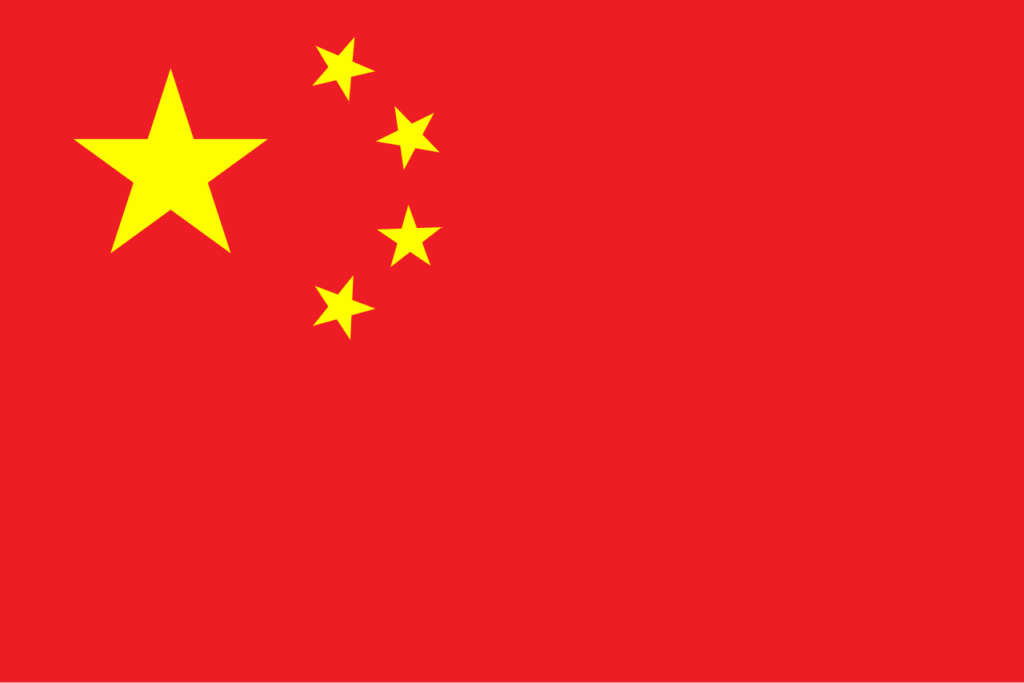
People’s Republic of China (Zhōnghuá Rénmín Gònghéguó, 中华人民共和国)(1949 – present)
Heads of State of the People’s Republic of China
History
Since its foundation on October 1 1949, the People’s Republic of China (PRC) has had a variety of different constitutional arrangements, and the question “who is the head of state?” has not always been easy to answer. At some times, the head of state and the political leader of the Communist Party of China were different people. At other times the official head of state role was left vacant. At yet other times, the acknowledged “Paramount Leader” and the head of state were not the same person (Deng Xiaoping was never President of the People’s Republic, for instance, despite being the most powerful political figure in the country in the 1980s).
The first constitutional arrangement used by the PRC was the Central People’s Government (October 1 1949 – September 20 1954). This was a provisional government, led by Mao Zedong as Chairman, who’s purpose was to govern the country while a new constitution was drafted and approved. This new constitution, in force from September 20 1954 until January 17 1975, formalized the role of Chairman as head of state, with Mao initially continuing in that role. In the midst of the Cultural Revolution, Mao ousted his successor as Chairman, Liu Shaoqi, and the role was left officially vacant, being filled only on an acting basis, until it was abolished in 1975.
Under the two subsequent constitutions, adopted in 1975 and 1978, the role of head of state was legally exercised by the Chairman of the Standing Committee of the National People’s Congress (see list here). The current constitution, which came into force on December 4 1982, established the office of President, which was first occupied by Li Xiannian beginning in June 1983. Initially, this office was largely ceremonial; during the Deng Xiaoping era, a greater emphasis was placed on collective leadership. Beginning with Jiang Zemin in the 1990s, however, the presidency became the most powerful state post in the country, as the president was also the head of the Communist Party (as General Secretary) and the military (as Chairman of the Central Military Commission).
List of Heads of State of the People’s Republic of China
Chairman of the Central People’s Government
Name
Political Party
Dates in Office
Mao Zedong
Date of birth/date of death:
Born December 26 1893. Died September 9 1976.
Communist Party of China
October 1 1949 – September 27 1954
Chairman of the People’s Republic of China
Name
Political Party
Dates in Office
Mao Zedong
Date of birth/date of death:
Born December 26 1893. Died September 9 1976.
Communist Party of China
September 27 1954 – April 27 1959
Liu Shaoqi
Date of birth/date of death:
Born November 24 1898. Died November 12 1969.
Communist Party of China
April 27 1959 – October 31 1968
Soong Ching-ling (acting)
Date of birth/date of death:
Born January 27 1893. Died May 29 1981.
Revolutionary Committee of the Chinese Kuomintang
October 31 1968 – February 24 1972
Dong Biwu (acting)
Date of birth/date of death:
Born March 5 1886. Died April 2 1975.
Communist Party of China
February 24 1972 – January 17 1975
Between 1975 and 1983 there was no de jure head of state in the People’s Republic of China. The duties of the head of state were carried out by the Chair of the Standing Committee of the National People’s Congress (see list here).
President of the People’s Republic of China
Name
Political Party
Dates in Office
Li Xiannian
Date of birth/date of death:
Born June 23 1909. Died June 21 1992.
Communist Party of China
June 18 1983 – April 8 1988
Yang Shangkun
Date of birth/date of death:
Born August 3 1907. Died September 14 1998.
Communist Party of China
April 8 1988 – March 27 1993
Jiang Zemin
Date of birth/date of death:
Born August 17 1926. Died November 30 2022.
Communist Party of China
March 27 1993 – March 15 2003
Hu Jintao
Date of birth/date of death:
Born December 21 1942.
Communist Party of China
March 15 2003 – March 14 2013
Xi Jinping
Date of birth/date of death:
Born June 15 1953.
Communist Party of China
March 14 2013 – present
Deputy Heads of State of the People’s Republic of China
Under the provisional governmental structure established at the founding of the People’s Republic of China in 1949, the Central People’s Government included several vice chairmen serving alongside the chairman, Mao Zedong. Unlike the later vice presidency, this was a collective office held simultaneously by multiple individuals, including leading figures from both the Communist Party and several smaller parties aligned with the new regime. This arrangement reflected the early political framework of the new state, which formally presented itself as a broad united front coalition rather than a strictly single-party government.
The institutional history of the vice presidency since then largely mirrors the presidency itself: the office existed under the 1954 constitution (as Vice Chairman), disappeared during the Cultural Revolution, and was restored in the 1982 constitutional reforms. Because the vice president’s role has always been tied closely to the presidency, its powers have generally been limited and dependent on delegation from the president. Since the revival of the office in 1983, the vice president has served primarily in supporting and representative role, assisting the president and carrying out diplomatic or ceremonial tasks as assigned. In practice, however, the office has sometimes been used to position senior leaders for higher authority within the Chinese political system, particularly when the vice president is also a prominent figure within the Chinese Communist Party leadership.
Vice Chairman of the Central People’s Government
Soong Ching-ling
Date of birth/date of death: b. January 27 1893; d. May 29 1981.
Revolutionary Committee of the Chinese Kuomintang
1949 – 1954
Zhu De
Date of birth/date of death: b. December 1 1886; d. July 6 1976.
Communist Party of China
1949 – 1954
Gao Gang
Date of birth/date of death: b. 1905; d. August 1954.
Communist Party of China
1949 – 1954
Li Jishen
Date of birth/date of death: b. November 5 1885; d. October 9 1959.
Revolutionary Committee of the Chinese Kuomintang
1949 – 1954
Zhang Lan
Date of birth/date of death: b. April 2 1872; d. February 1955.
China Democratic League
1949 – 1954
Liu Shaoqi
Date of birth/date of death: b. November 24 1898; d. November 12 1969.
Communist Party of China
1949 – 1954
Vice Chairman of the People’s Republic of China
Zhu De
Date of birth/date of death: b. December 1 1886; d. July 6 1976.
Communist Party of China
1954 – 1959
Dong Biwu
Date of birth/date of death: b. March 5 1886; d. April 2 1975.
Communist Party of China
1959 – 1975
Soong Ching-ling
Date of birth/date of death: b. January 27 1893; d. May 29 1981.
Revolutionary Committee of the Chinese Kuomintang
1959 – 1975
Vice President of the People’s Republic of China
Ulanhu
Date of birth/date of death: b. December 23 1907; d. December 8 1988.
Communist Party of China
1983 – 1988
Wang Zhen
Date of birth/date of death: b. April 11 1908; d. March 12 1993.
Communist Party of China
1988 – 1993
Rong Yiren
Date of birth/date of death: b. May 1 1916; d. October 26 2005.
Communist Party of China
1993 – 1998
Hu Jintao
Date of birth/date of death: b. December 21 1942.
Communist Party of China
1998 – 2003
Zeng Qinghong
Date of birth/date of death: b. July 30 1939.
Communist Party of China
2003 – 2008
Xi Jinping
Date of birth/date of death: b. June 23 1909; d. June 21 1992.
Communist Party of China
2008 – 2013
Li Yuanchao
Date of birth/date of death: b. November 20 1950.
Communist Party of China
2013 – 2018
Wang Qishan
Date of birth/date of death: b. July 19 1948.
Communist Party of China
2018 – 2023
Han Zheng
Date of birth/date of death: b. April 1955.
Communist Party of China
2023 – present
Heads of Government of the People’s Republic of China
The Premier of the People’s Republic of China is the head of government of the People’s Republic of China, serving as the leader of the State Council (the country’s central administrative authority). While formally responsible for overseeing government operations, economic policy, and the implementation of laws, the office has historically operated within a political system in which ultimate authority rests with the leadership of the Chinese Communist Party.
The position originated in 1949 with the establishment of the People’s Republic, when Zhou Enlai became Premier of the Government Administration Council, the chief executive body under the provisional political framework. With the adoption of the 1954 Constitution, this structure was reorganized into the State Council, and the title of premier was retained as the head of government. Zhou remained in office until his death in 1976, shaping the role as a central coordinating position within the state apparatus.
During the later years of the Cultural Revolution, the premiership was one of the few state institutions to remain continuously in operation, though its effectiveness and autonomy were constrained by political upheaval. After Zhou’s death, the office was briefly held by Hua Guofeng, who simultaneously emerged as a key transitional leader following the death of Mao Zedong. Under the reforms associated with Deng Xiaoping in the late 1970s and 1980s, the premiership became more clearly defined as the chief administrative and economic policymaking role within the government. Premiers such as Zhao Ziyang and Li Peng played prominent roles in managing economic reform and state administration, though always within the broader framework of party leadership.
In the contemporary system, the premier remains formally responsible for directing the State Council, supervising ministries, and managing the national economy. However, real political authority is closely tied to the top leadership of the Communist Party, and the premier typically serves as the second-ranking figure in the political hierarchy, subordinate to the party’s general secretary.
Premier of the State Council of the People’s Republic of China
Zhou Enlai
Date of birth/date of death: b. March 5 1898; d. January 8 1976.
Communist Party of China
1949 – 1976
Hua Guofeng
Date of birth/date of death: b. February 16 1921; d. August 20 2008.
Communist Party of China
1976 – 1980
Zhao Ziyang
Date of birth/date of death: b. October 17 1919; d. January 17 2005.
Communist Party of China
1980 – 1987
Li Peng
Date of birth/date of death: b. October 20 1928; d. July 22 2019.
Communist Party of China
1987 – 1998
Zhu Rongji
Date of birth/date of death:
Born October 23 1928. Died August 12 2026.
Communist Party of China
March 17 1998 – March 16 2003
Wen Jiabao
Date of birth/date of death: b. September 15 1942.
Communist Party of China
2003 – 2013
Li Keqiang
Date of birth/date of death: b. July 3 1955; d. October 27 2023.
Communist Party of China
2013 – 2023
Li Qiang
Date of birth/date of death: b. July 1959.
Communist Party of China
2023 – present
Deputy Heads of Government of the People’s Republic of China
The Deputy Premiers of the People’s Republic of China are senior members of the State Council who assist the premier in the administration of government policy and oversight of key sectors. As part of the executive structure of the People’s Republic of China, deputy premiers are appointed to support the work of the premier and typically hold responsibility for specific policy areas such as the economy, agriculture, industry, or foreign affairs. The number of deputy premiers has varied over time, reflecting changing administrative needs and political priorities.
The office dates back to the founding of the PRC in 1949, when the Government Administration Council included multiple vice premiers serving under Zhou Enlai. From the outset, this was conceived as a collective supporting leadership, with several individuals holding the position simultaneously rather than a single deputy. This structure was retained under the 1954 Constitution with the establishment of the State Council, where vice premiers (later translated as deputy premiers) continued to function as senior aides to the head of government. During the upheaval of the Cultural Revolution, the role of deputy premiers, like much of the state apparatus, was affected by political disruption, though the institution itself was never formally abolished. Senior figures such as Deng Xiaoping served as vice premier during this period, at times wielding significant practical influence despite the unstable political environment.
Following the reorganization of the state under the 1982 Constitution, the position of deputy premier became more clearly defined within a regularized governmental structure.
Heads of Government of China
Republic of China
Premier of the Republic of China
V.K. Wellington Koo
Date of birth/date of death: b. January 29 1888; d. November 14 1985.
Independent
1924
V.K. Wellington Koo (*acting)
Date of birth/date of death: b. January 29 1888; d. November 14 1985.
Independent
1926 – 1927
V.K. Wellington Koo
Date of birth/date of death: b. January 29 1888; d. November 14 1985.
Independent
1927
Premier of the National Government of the Republic of China
Chiang Kai-shek
Date of birth/date of death: b. October 31 1887; d. April 5 1975.
Kuomintang
1930 – 1931
Chiang Kai-shek
Date of birth/date of death: b. October 31 1887; d. April 5 1975.
Kuomintang
1935 – 1938
Chiang Kai-shek
Date of birth/date of death: b. October 31 1887; d. April 5 1975.
Kuomintang
1939 – 1945
Chiang Kai-shek
Date of birth/date of death: b. October 31 1887; d. April 5 1975.
Kuomintang
1947
Premier of the Republic of China
Chiang Ching-kuo
Date of birth/date of death: b. April 27 1910; d. January 13 1988.
Kuomintang
1972 – 1978
Yu Kuo-hwa
Date of birth/date of death: b. January 10 1914; d. October 4 2000.
Kuomintang
1984 – 1989
Lee Huan
Date of birth/date of death: b. February 8 1917; d. December 2 2010.
Kuomintang
1989 – 1990
Hau Pei-tsun
Date of birth/date of death: b. August 8 1919; d. March 30 2020.
Kuomintang
1990 – 1993
Lien Chan
Date of birth/date of death: b. August 27 1936.
Kuomintang
1993 – 1997
Siew Wan-chang
Date of birth/date of death: b. January 3 1939.
Kuomintang
1997 – 2000
Tang Fei
Date of birth/date of death: b. March 15 1932.
Kuomintang
2000
Chang Chun-hsiung
Date of birth/date of death: b. March 23 1938; d. September 27 2025.
Democratic Progressive Party
2000 – 2002
You Si-kun
Date of birth/date of death: b. April 25 1948.
Democratic Progressive Party
2002 – 2005
Frank Hsieh Chang-ting
Date of birth/date of death: b. May 18 1946.
Democratic Progressive Party
2005 – 2006
Su Tseng-chang
Date of birth/date of death: b. July 28 1948.
Democratic Progressive Party
2006 – 2007
Chang Chun-hsiung
Date of birth/date of death: b. March 23 1938; September 27 2025.
Democratic Progressive Party
2007 – 2008
Liu Chao-shiuan
Date of birth/date of death: b. May 10 1943.
Kuomintang
2008 – 2009
Wu Den-yih
Date of birth/date of death: b. January 30 1948.
Kuomintang
2009 – 2012
Lin Chuan
Date of birth/date of death: b. December 13 1951.
Independent
2016 – 2017
Lai Ching-te
Date of birth/date of death: b. October 6 1959.
Democratic Progressive Party
2017 – 2019
Su Tseng-chang
Date of birth/date of death: b. July 28 1948.
Democratic Progressive Party
2019 – 2023
Chen Chien-jen
Date of birth/date of death: b. June 6 1951.
Democratic Progressive Party
2023 – 2024
Cho Jung-tai
Date of birth/date of death: b. January 22 1959.
Democratic Progressive Party
2024 – present
Vice Premier of the Republic of China
Chiang Ching-kuo
Date of birth/date of death: b. April 27 1910; d. January 13 1988.
Kuomintang
1969 – 1972
Lien Chan
Date of birth/date of death: b. August 27 1936.
Kuomintang
1987 – 1988
Liu Chao-shiuan
Date of birth/date of death: b. May 10 1943.
Kuomintang
1997 – 2000
Chang Chun-hsiung
Date of birth/date of death: b. March 23 1938; d. September 27 2025.
Democratic Progressive Party
2000
You Si-kun
Date of birth/date of death: b. April 25 1948.
Democratic Progressive Party
2000
Lai In-jaw
Date of birth/date of death: b. August 24 1946.
Democratic Progressive Party
2000 – 2002
Tsai Ing-wen
Date of birth/date of death: b. August 31 1956.
Democratic Progressive Party
2006 – 2007
Chiou I-jen
Date of birth/date of death: b. May 9 1950.
Democratic Progressive Party
2007 – 2008
Chang Chun-hsiung (*acting)
Date of birth/date of death: b. March 23 1938; d. September 27 2025.
Democratic Progressive Party
2008
Chiu Cheng-hsiung
Date of birth/date of death: b. February 19 1942; d. July 2025.
Kuomintang
2008 – 2009
Eric Li-luan Chu
Date of birth/date of death: b. June 7 1961.
Kuomintang
2009 – 2010
People’s Republic of China
First-Ranking Vice Premier of the People’s Republic of China
Chen Yun
Date of birth/date of death: b. June 13 1905; d. April 10 1995.
Communist Party of China
1954 – 1965
Deng Xiaoping
Date of birth/date of death: b. August 22 1904; d. February 19 1997.
Communist Party of China
1975 – 1976
Li Xiannian
Date of birth/date of death: b. June 23 1909; d. June 21 1992.
Communist Party of China
1976 – 1977
Deng Xiaoping
Date of birth/date of death: b. August 22 1904; d. February 19 1997.
Communist Party of China
1977 – 1980
Zhu Rongji
Date of birth/date of death:
Born October 23 1928. Died August 12 2026.
Communist Party of China
March 29 1993 – March 17 1998
Huang Ju
Date of birth/date of death: b. September 28 1938; d. June 2 2007.
Communist Party of China
2003 – 2007
Li Keqiang
Date of birth/date of death: b. July 3 1955; d. October 27 2023.
Communist Party of China
2008 – 2013
Han Zheng
Date of birth/date of death: b. April 1955.
Communist Party of China
2018 – 2023