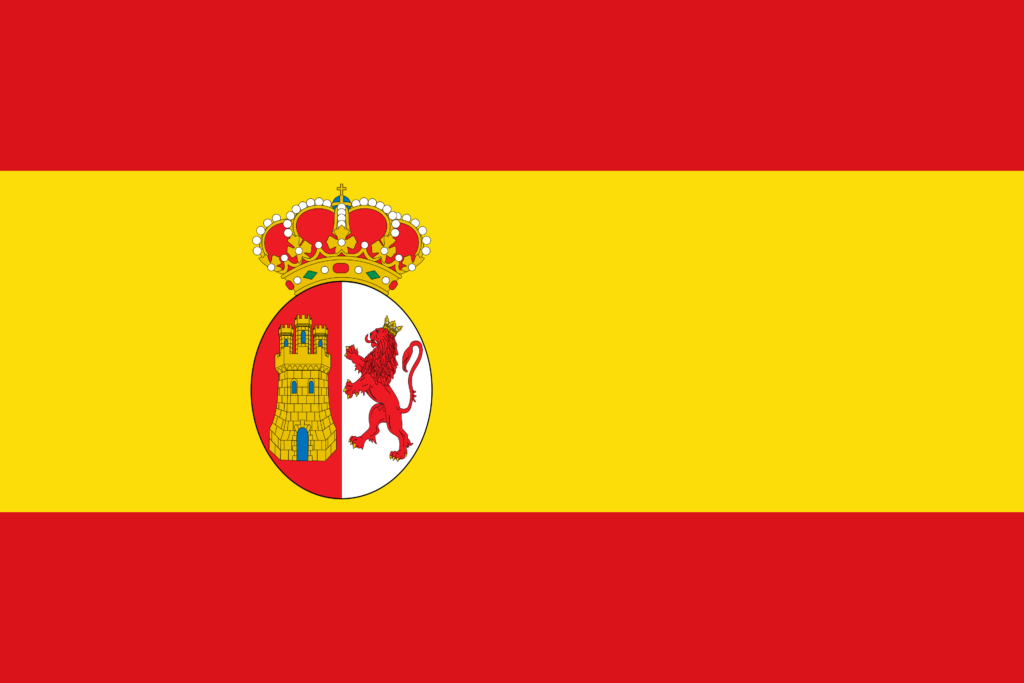
Kingdom of Spain (Reino de España) (1516 – 1873)
Heads of State of the Kingdom of Spain
List of Heads of State of the Kingdom of Spain
King of Spain
Name
Royal House
Dates of Reign
Isabella I “the Catholic” (Isabel I la Católica)
Date of birth/date of death:
Born April 22 1451. Died November 26 1504.
House of Trastámara
December 11 1474 – November 26 1504
Ferdinand II “the Catholic” (Fernando V la Católica)
Date of birth/date of death:
Born March 10 1452. Died January 23 1516.
House of Trastámara
January 15 1475 – January 23 1516
Charles I (Carlos I)
Date of birth/date of death:
Born February 24 1500. Died September 21 1558.
House of Habsburg
March 14 1516 – January 16 1556
Philip II “the Prudent” (Felipe II el Prudente)
Date of birth/date of death:
Born May 21 1527. Died September 13 1598.
House of Habsburg
January 16 1556 – September 13 1598
Philip III “the Pious” (Felipe III el Piadoso)
Date of birth/date of death:
Born April 14 1578. Died March 31 1621.
House of Habsburg
September 13 1598 – March 31 1621
Philip IV “the Great” (Felipe IV el Grande)
Date of birth/date of death:
Born April 8 1605. Died September 17 1665.
House of Habsburg
March 31 1621 – September 17 1665
Charles II “the Bewitched” (Carlos II el Hechizado)
Date of birth/date of death:
Born November 6 1661. Died November 1 1700.
House of Habsburg
September 17 1665 – November 1 1700
Philip V “the Spirited” (Felipe V el Animoso)
Date of birth/date of death:
Born December 19 1683. Died July 9 1746.
House of Bourbon—Capet
November 1 1700 – January 15 1724
Philip V “the Spirited” (Felipe V el Animoso)
Date of birth/date of death:
Born December 19 1683. Died July 9 1746.
House of Bourbon—Capet
September 6 1724 – July 9 1746
Heads of State of Spain
Kingdom of Spain
Monarch of Spain
Philip V
Date of birth/date of death: b. December 19 1683; d. July 9 1746.
House of Bourbon – Capet
1700 – 1724
Philip V
Date of birth/date of death: b. December 19 1683; d. July 9 1746.
House of Bourbon – Capet
1724 – 1746
Charles III
Date of birth/date of death: b. January 20 1716; d. December 14 1788.
House of Bourbon – Capet
1759 – 1788
Ferdinand VII
Date of birth/date of death: b. October 14 1784; d. September 29 1833.
House of Bourbon – Capet
1808
Joseph
Date of birth/date of death: b. January 7 1768; d. July 28 1844.
House of Bonaparte
1808 – 1813
Ferdinand VII
Date of birth/date of death: b. October 14 1784; d. September 29 1833.
House of Bourbon – Capet
1813 – 1833
Isabella II
Date of birth/date of death: b. October 10 1830; d. April 10 1904.
House of Bourbon – Capet
1833 – 1868
Alphonso XIII
Date of birth/date of death: b. May 17 1886; d. February 28 1941.
House of Bourbon – Capet
1886 – 1931
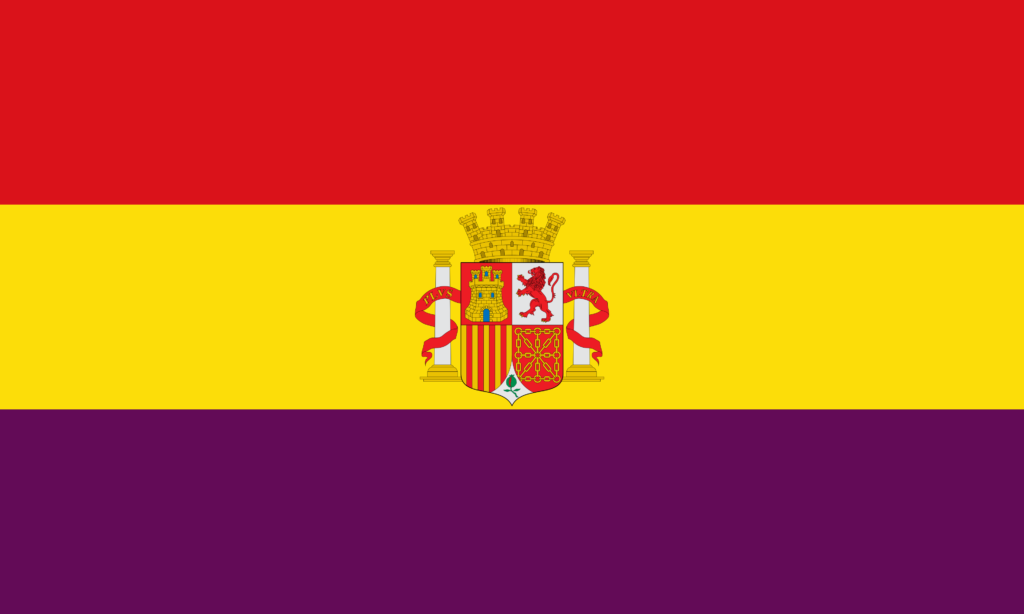
Second Spanish Republic (República Española) (1931 – 1939)
Heads of State of the Second Spanish Republic
List of Heads of State of the Second Spanish Republic
President of the National Defence Council (Presidente del Consejo de Defensa Nacional)
Name
Political Party
Dates in Office
Segismundo Casado López
Date of birth/date of death:
Born October 10 1893. Died December 18 1968.
Non-Partisan (Military)
March 4 1939 – March 13 1939
José Miaja Menant
Date of birth/date of death:
Born April 20 1878. Died January 14 1958.
Non-Partisan (Military)
March 13 1939 – March 27 1939
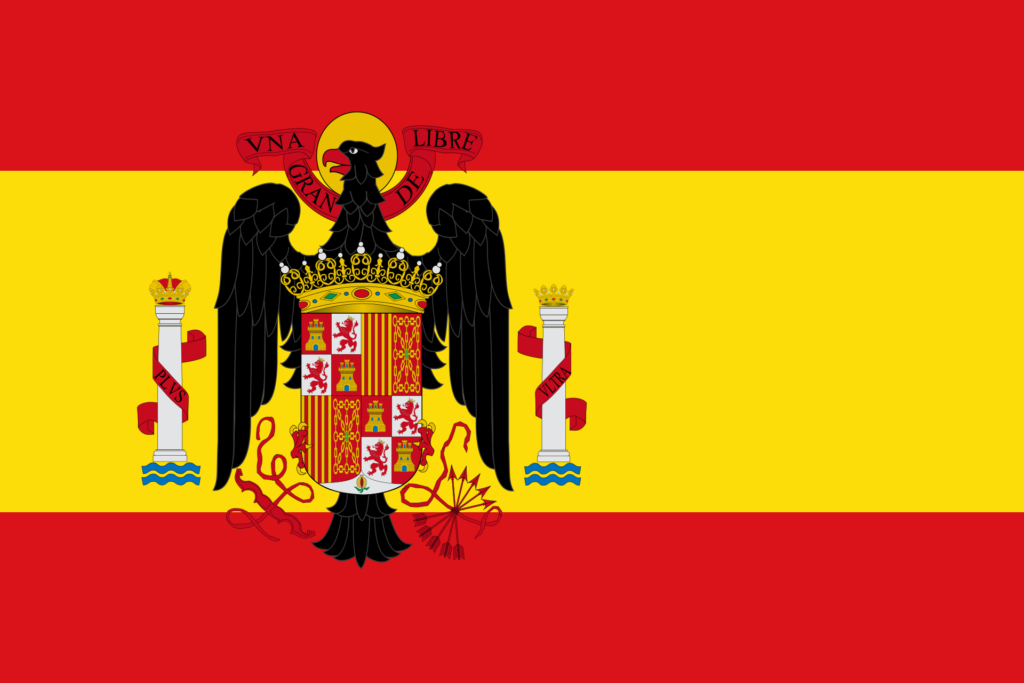
Spanish State (Estado Español) (1936 – 1975)
Heads of State of the Spanish State
History
Shortly after the outbreak of the Spanish Civil War in 1936, General Francisco Franco was proclaimed leader of the Nationalist forces and assumed the title Head of the State (Jefe del Estado). Under this system, the office was not an independent constitutional institution but rather the personal authority of Franco himself, who appointed governments, promulgated laws, and exercised broad control over the political system. Following the Nationalist victory in 1939, Franco ruled Spain as an authoritarian dictator, concentrating in his own person the powers of head of state, head of government, and commander-in-chief of the armed forces. The political system suppressed opposition parties, imposed strict censorship, and emphasized nationalist, Catholic, and corporatist principles.
After the defeat of fascist powers in World War II, the regime gradually adapted in order to survive international isolation. The institutional framework of the regime developed gradually through a series of “Fundamental Laws,” including the Law of Succession in the Headship of the State, which formally declared Spain a kingdom while leaving the throne vacant and confirming Franco as head of state for life. These post-war reforms created formal institutions such as the Cortes and the Council of the Realm, though they remained subordinate to Franco. At the same time, the regime increasingly emphasized traditional Catholic and conservative elements rather than its earlier fascist rhetoric.
List of Heads of State of the Spanish State
Head of the State (Jefe del Estado)
Name
Political Party
Dates in Office
Francisco Franco Bahamonde
Date of birth/date of death:
Born December 4 1892. Died November 20 1975.
Falange Española Tradicionalista
October 1 1936 – November 20 1975
President of the Regency Council of Spain (Presidente del Consejo de Regencia de España)
Name
Political Party
Dates in Office
Alejandro Rodríguez de Valcárcel y Nebreda
Date of birth/date of death:
Born December 25 1917. Died October 22 1976.
Falange Española Tradicionalista
November 20 1975 – November 22 1975
Heads of Government of the Spanish State
President of the Government
Carlos Arias Navarro
Date of birth/date of death: b. December 11 1908; d. November 27 1989.
National Movement
1973 – 1975
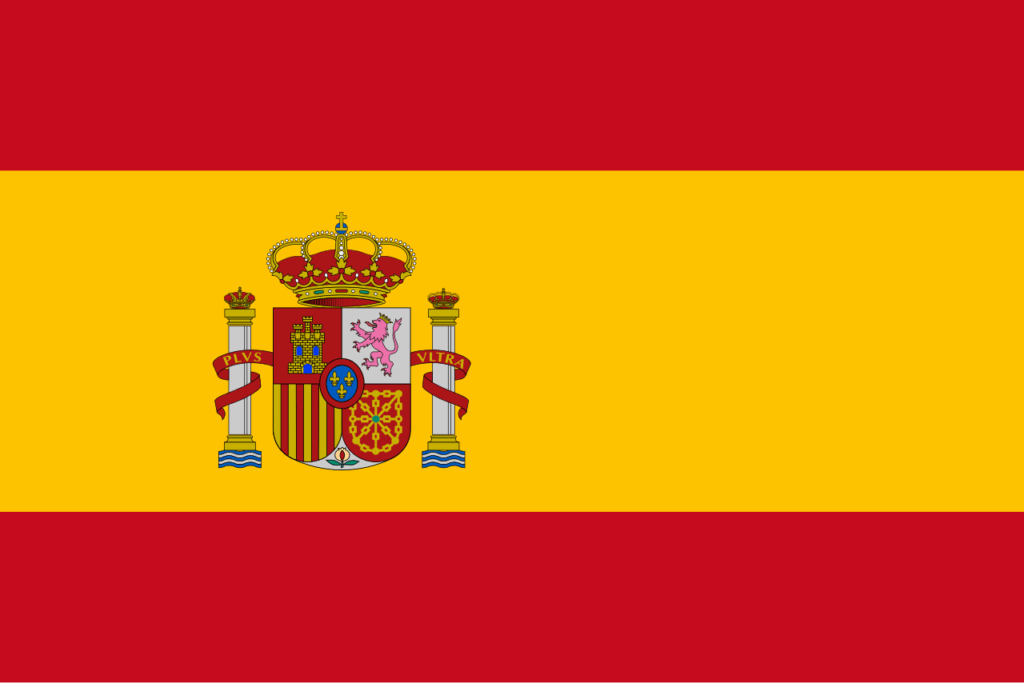
Kingdom of Spain (Reino de España) (1975 – present)
Heads of State of the Kingdom of Spain
History
Franco had designated Juan Carlos I, the grandson of Alfonso XIII, as his successor in 1969. He expected that the monarchy would preserve the conservative authoritarian political order he had established. Instead, Juan Carlos played a key role in Spain’s transition to democracy. The king’s public condemnation of the attempted military coup in 1981 is widely regarded as a decisive moment in consolidating Spain’s democratic system. However, the prestige of the crown declined in the early 21st century amid controversies surrounding the royal family, particularly involving Juan Carlos. In 2014 he abdicated in favor of his son, Felipe VI, who has sought to restore confidence in the monarchy through a more restrained and transparent approach to the institution.
The role of the king was formalized by the Spanish Constitution of 1978, which established Spain as a parliamentary monarchy. The king became the ceremonial head of state and symbol of national unity, while executive authority was vested in the elected government led by the prime minister. Constitutionally, the monarch performs largely formal duties: sanctioning laws, formally appointing the prime minister after parliamentary consultations, summoning and dissolving parliament, accrediting diplomats, and serving as commander-in-chief of the armed forces, though these powers are exercised according to constitutional convention and on the advice of the government.
List of Heads of State of Spain
King of Spain (Rey de España)
Name
Royal House
Dates of Reign
John Charles (Juan Carlos I)
Date of birth/date of death:
Born January 5 1938.
House of Bourbon—Capet
November 22 1975 – June 19 2014
Philip VI (Felipe VI)
Date of birth/date of death:
Born January 30 1968.
House of Bourbon—Capet
June 19 2014 – present
Heads of Government of the Kingdom of Spain
The head of government of modern Spain is the prime minister, officially styled President of the Government (Presidente del Gobierno). Under the Constitution of 1978, Spain became a parliamentary monarchy in which executive power is exercised by the government, led by the prime minister, while the monarch serves as head of state with largely ceremonial responsibilities.
After consultations with political parties represented in the Congress of Deputies, the king nominates a candidate for the premiership. The candidate must then obtain the confidence of the lower house of parliament. Once invested, the prime minister appoints and dismisses members of the Council of Ministers, directs the government’s policy agenda, and may request the dissolution of parliament and the calling of new elections. Although the monarch formally appoints the prime minister and promulgates laws, these acts are performed on the advice of the government and in accordance with parliamentary decisions.
Since the establishment of the democratic constitutional order, the office has evolved within an increasingly competitive multiparty system. In the early decades after the transition, Spanish politics was largely dominated by two major parties, with stable single-party governments providing strong executive leadership. More recently, the fragmentation of the party system has produced coalition governments and more complex parliamentary negotiations in the investiture process.
President of the Government
Carlos Arias Navarro
Date of birth/date of death: b. December 11 1908; d. November 27 1989.
National Movement
1975 – 1976
Adolfo Suárez González
Date of birth/date of death: b. September 25 1932; d. March 23 2014.
National Movement (1976 – 1977); Union of the Democratic Centre (1977 – 1982)
1976 – 1981
Leopoldo Ramón Pedro Calvo-Sotelo y Bustelo
Date of birth/date of death: b. April 14 1926; d. May 3 2008.
Union of the Democratic Centre
1981 – 1982
Felipe González Márquez
Date of birth/date of death: b. March 5 1942.
Spanish Socialist Workers’ Party
1982 – 1996
José María Aznar López
Date of birth/date of death: b. February 25 1953.
People’s Party
1996 – 2004
José Luis Rodríguez Zapatero
Date of birth/date of death: b. August 4 1960.
Spanish Socialist Workers’ Party
2004 – 2011
Mariano Rajoy Brey
Date of birth/date of death: b. March 27 1955.
People’s Party
2011 – 2018
Pedro Sánchez Pérez-Castejón
Date of birth/date of death: b. February 29 1972.
Monarch: Philip VI.
Other prominent offices: Member of the Congress of Deputies (2009 – 2011, 2013 – 2016, 2019 – present); Secretary-General of the Spanish Socialist Workers’ Party (2014 – 2016, 2017 – present); Leader of the Opposition (2014 – 2016, 2017 – 2018).
Spanish Socialist Workers’ Party
2018 – present
Deputy Heads of Government of the Kingdom of Spain
First Vice President of the Government
María Soraya Sáenz de Santamaría Antón
Date of birth/date of death: b. June 10 1971.
People’s Party
2011 – 2018
María del Carmen Calvo Poyato
Date of birth/date of death: b. June 9 1957.
Spanish Socialist Workers’ Party
2018 – 2021
Nadia María Calviño Santamaría
Date of birth/date of death: b. October 3 1968.
Independent
2021 – 2023
María Jesús Montero Cuadrado
Date of birth/date of death: b. February 4 1966.
Spanish Socialist Workers’ Party
2023 – present
Second Vice President of the Government
Leopoldo Ramón Pedro Calvo-Sotelo y Bustelo
Date of birth/date of death: b. April 14 1926; d. May 3 2008.
Union of the Democratic Centre
1980 – 1981
Nadia María Calviño Santamaría
Date of birth/date of death: b. October 3 1968.
Independent
2021
Third Vice President of the Government
Nadia María Calviño Santamaría
Date of birth/date of death: b. October 3 1968.
Independent
2020 – 2021
Fourth Vice President of the Government
María Jesús Montero Cuadrado
Date of birth/date of death: b. February 4 1966.
Spanish Socialist Workers’ Party
2023
Leaders of the Opposition in the Kingdom of Spain
Leader of the Opposition
José María Aznar López
Date of birth/date of death: b. February 25 1953.
People’s Party
1989 – 1996
Heads of Government of Spain
Kingdom of Spain
Prime Minister of Spain
Carlos Martínez de Irujo y Tacón, 1st Marquess of Casa Irujo
Date of birth/date of death: b. December 4 1763; d. January 17 1824.
Non-Partisan
1823 – 1824
Miguel Ricardo de Álava y Esquivel
Date of birth/date of death: b. July 7 1770; d. July 14 1843.
Progressive Party
1835
The Spanish State
Prime Minister of Spain
Francisco Franco Bahamonde
Date of birth/date of death: b. December 4 1892; d. November 20 1975.
Falange Española Tradicionalista
1938 – 1973
Kingdom of Spain
First Deputy Prime Minister of Spain
Mariano Rajoy Brey
Date of birth/date of death: b. March 27 1955.
People’s Party
2000 – 2003
Rodrigo de Rato y Figaredo
Date of birth/date of death: b. March 18 1949.
People’s Party
2003 – 2004
Alfredo Pérez Rubalcaba
Date of birth/date of death: b. July 28 1951; d. May 10 2019.
Spanish Socialist Workers’ Party
2010 – 2011
Leader of the Opposition
Felipe González Márquez
Date of birth/date of death: b. March 5 1942.
Spanish Socialist Workers’ Party
1996 – 1997
Josep Borrell Fontelles
Date of birth/date of death: b. April 24 1947.
Spanish Socialist Workers’ Party
1998 – 1999
José Luis Rodríguez Zapatero
Date of birth/date of death: b. August 4 1960.
Spanish Socialist Workers’ Party
2000 – 2004
Mariano Rajoy Brey
Date of birth/date of death: b. March 27 1955.
People’s Party
2004 – 2011
Alfredo Pérez Rubalcaba
Date of birth/date of death: b. July 28 1951; d. May 10 2019.
Spanish Socialist Workers’ Party
2011 – 2014
Pedro Sánchez Pérez-Castejón
Date of birth/date of death: b. February 29 1972.
Spanish Socialist Workers’ Party
2014 – 2016
Pedro Sánchez Pérez-Castejón
Date of birth/date of death: b. February 29 1972.
Spanish Socialist Workers’ Party
2017 – 2018
Pablo Casado Blanco
Date of birth/date of death: b. February 1 1981.
People’s Party
2018 – 2022
Alberto Núñez Feijóo
Date of birth/date of death: b. September 10 1961.
People’s Party
2022 – present
Sub-National Monarchies
Kingdom of Navarre
Henry III
Date of birth/date of death: b. December 13 1553; d. May 14 1610.
House of Bourbon – Capet
1572 – 1610
Louis II
Date of birth/date of death: b. September 27 1601; d. May 14 1643.
House of Bourbon – Capet
1610 – 1620